SEO CASE STUDY · AEKAM × LABOFAB
A decade of shifting algorithms, website rebuilds and changing search behaviour — and one thing that stayed consistent: organic visibility.
SEO is easy to talk about when you have a new website and a few fresh rankings to show. It becomes far more interesting when you look at what happens ten years later.
Over a decade, almost everything around a website can change. Google changes how results are displayed. Search behaviour shifts. Competitors change. Websites get redesigned. Pages get restructured. New search features appear. Today, users see AI-generated answers, maps and images before they ever click a traditional organic result.
Labofab’s SEO journey with Aekam has seen those changes first-hand. Labofab, a pharmaceutical laboratory manufacturer and supplier, has worked with Aekam for ten years — not just on SEO, but on the website itself, through multiple redesigns and restructures, with the SEO strategy evolving around every change.
The 2016 and 2026 ranking reports give us something useful: a way to see what changed over those ten years.
10 Years, One SEO Partnership
Maintaining organic visibility for a decade takes a lot more than getting one keyword to position one, once: the website was already performing strongly for several important laboratory-furniture searches.
Maintaining organic visibility for a decade takes a lot more than getting one keyword to position one, once. Over the years, Labofab’s website has gone through repeated restructuring, and because Aekam has handled the design work too, SEO and website development were never treated as disconnected activities.
That matters, because a website isn’t a photograph. It changes.
Pages change. Content changes. Designs change. Navigation changes. Business offerings evolve. And whenever those things change, SEO has to understand what is happening underneath.
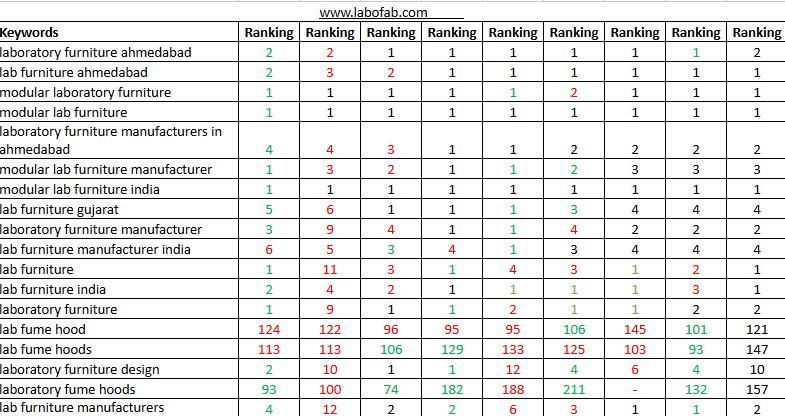
Ranking history: www.labofab.com — position movement for core laboratory-furniture keywords, tracked across nine separate periods. Green shifts mark improvement, red marks drop-off; the pattern shows recovery every time.
The real work is understanding why a page is ranking, what people are actually searching for, and what needs to be maintained when the website changes. There’s no shortcut here — you keep working on the website, keep reading search behaviour, keep improving relevant content, and keep protecting the organic presence a business has built over time.
From Rankings to Search Experience
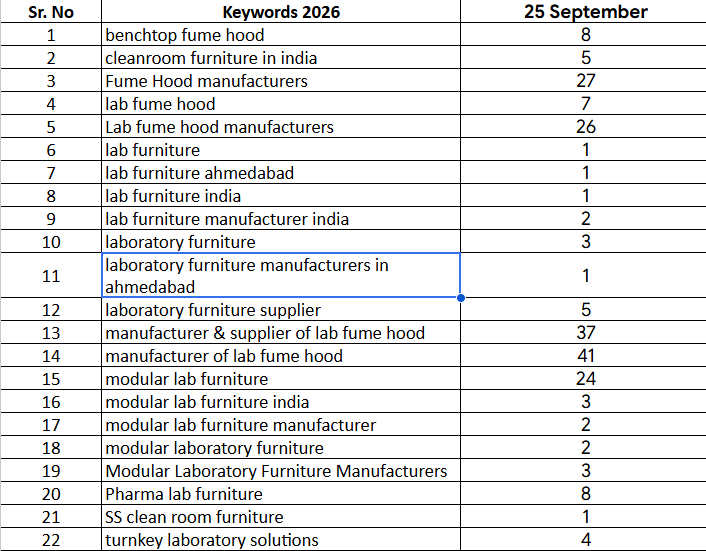
Set the 2026 report next to the 2016 one, and the search landscape feels like a different world. Rankings no longer appear in isolation. The current report tracks additional search features — AI Mode, Map Listings and Images — showing how much broader the search experience has become.
For example, “laboratory furniture ahmedabad” and “lab furniture ahmedabad” now hold strong organic positions alongside these newer search features, not instead of them.

AI Mode: Labofab surfaced directly inside Google’s AI-generated answer for turnkey and modular lab suppliers.
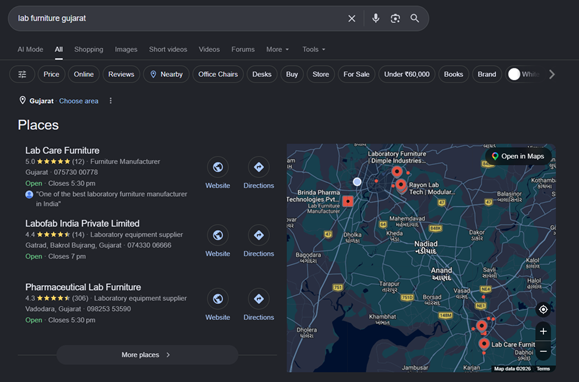
Map Listings: Labofab India Private Limited appearing in the Places pack for “lab furniture Gujarat.”
The same pattern repeats across other tracked terms — “modular laboratory furniture,” “modular lab furniture manufacturer,” “modular lab furniture India” and “laboratory furniture manufacturer” all continue to show meaningful organic visibility, even as the results around them fill up with these newer features.
This is also where SXO, or Search Experience Optimization, becomes relevant.
It’s relatively new terminology, but the thinking behind it is close to what long-term SEO has always needed to do: understand the searcher, provide relevant information, make the website easy to navigate, and build a useful path from search to enquiry.
The 2016 report was primarily about traditional keyword rankings. The 2026 report shows a much wider search environment — organic results sitting alongside AI features, maps and images. So, when someone says “SEO has changed,” the answer is simple: yes, it has. And that’s exactly why SEO cannot stay the same for ten years — the strategy has to change with the environment around it.
What Long-Term SEO Means for a Business
There’s one question businesses keep asking about SEO: will it actually bring in business? Rankings are one part of the answer. Leads are another.
| 10
years, one SEO & website partnership |
50–60%
of Labofab’s leads come through SEO |
30+
keywords tracked across formats |
That’s a very different conversation from simply saying “we rank on Google.” A person searching for laboratory furniture manufacturers in Ahmedabad, a modular lab furniture manufacturer, a lab furniture manufacturer in India, a laboratory furniture supplier, or a specialised lab solution, usually already has a specific business requirement in mind.
The 2026 report shows Labofab appearing across this whole range — “laboratory furniture manufacturer,” “lab furniture manufacturer India,” “lab furniture,” “laboratory furniture,” “lab furniture manufacturers,” plus more specialised searches like “supplier of modular laboratory furniture,” “manufacturer & supplier of lab fume hood,” “turnkey laboratory solutions” and “cleanroom furniture in India.”
A B2B buyer rarely searches with one perfect keyword. Sometimes they search for a manufacturer. Sometimes a supplier. Sometimes a specific product, a location, or a complete solution. A long-term SEO strategy has to account for that spread of intent instead of chasing a single ranking screenshot — which is also the real difference between SEO companies in Ahmedabad that show short-term movement and long-term SEO partnerships built to hold visibility as the market keeps changing.
Why Organic Visibility Stayed Strong
The most interesting part of this case study isn’t that Labofab ranked in 2016. It isn’t simply that Labofab ranks today either. It’s what happened in between.
Over those ten years, Google changed, search changed, the website changed, and the way users interact with results changed. New search formats appeared. And yet organic presence continued to hold across the important laboratory-furniture and laboratory-solution searches.
“That doesn’t happen because of one trick. It comes from treating SEO as an ongoing process rather than a one-time activity.”
It means understanding the website before making changes. Thinking about content and structure together. Keeping pages relevant to what users actually search for. And paying attention when the website is redesigned, instead of treating redesign and SEO as two separate projects.
Month-by-month tracking, 2026 report: each cell shows both the ranking position and which search feature appeared alongside it — AI Mode, Map Listing, AI Overview or Images — across a full year of monthly snapshots.
This is where Aekam’s role with Labofab has been broader than SEO alone. We built the website. We worked on its SEO. We adapted as the website changed. And we kept working toward the same objective: keeping Labofab visible when relevant customers search — whether that customer is looking for a website design company in Ahmedabad or the lab furniture itself. A beautiful website is only useful if the people looking for it can find it, and strong rankings only matter if the visitor who lands on the page understands the offering and knows what to do next.
From traditional organic rankings in 2016 to a 2026 search environment that includes AI Mode, AI Overviews, Maps and Images, the format has changed significantly. But the fundamental business question hasn’t: can the right customer find you when they need what you sell? For Labofab, SEO has remained a central part of answering that — contributing an estimated 50–60% of leads, ten years in.
Not one ranking. Not one algorithm update. Not one website version. Ten years of adapting, maintaining and building organic visibility.
10 Years. One Partnership. A Strategy That Kept Evolving.
If you’re looking at SEO as a long-term channel rather than a short-term ranking exercise, we’d be happy to discuss what that could look like for your business.
Frequently Asked Questions
How has SEO changed over the last 10 years?
SEO has moved beyond traditional keyword rankings. Today’s search results can include AI-powered search features, map listings, images and other formats alongside organic results. Labofab’s 2026 ranking report reflects these additional search features across several tracked keywords.
How long has Aekam worked with Labofab?
Aekam has worked with Labofab for approximately 10 years, covering SEO as well as website design and development.
Does Labofab generate leads through SEO?
According to Labofab’s feedback, approximately 50–60% of its leads come through SEO, making organic search an important lead-generation channel for the business.
What is SXO and why does it matter?
SXO, or Search Experience Optimization, focuses on the broader experience around search — from understanding what users are looking for, to providing relevant content, useful website journeys and information that helps visitors take the next step.
Why does SEO need ongoing work?
Because search doesn’t stay the same. Websites, competitors, user behaviour and search-result formats keep changing. Long-term SEO lets a business adapt while continuing to protect the organic visibility it has already built.